
Why Your Data Lake Needs a Brain
We've moved from Data Warehouses to Data Lakes, and now to Data Lakehouses. Storage is cheap, and compute is scalable. But finding value in that data remains surprisingly hard.
The Metadata Gap
Most organizations have "swamps" rather than lakes—vast repositories of file dumps with no context. Who owns this data? What does it mean? Is it up to date?
Metadata management has historically been a manual, rigorous task that everyone hates and no one does well. This is where Active Metadata comes in.
AI as the Librarian
Zingle uses AI to automatically catalog, classify, and lineage your data. It's like having a team of librarians who work at the speed of light.
- Auto-Documentation: Descriptions for tables and columns generated from usage patterns and data sampling.
- Semantic Search: Ask "How many active users did we have in Q1?" instead of writing SQL.
- Lineage Tracing: Visualize exactly where data comes from and where it goes.
Conclusion
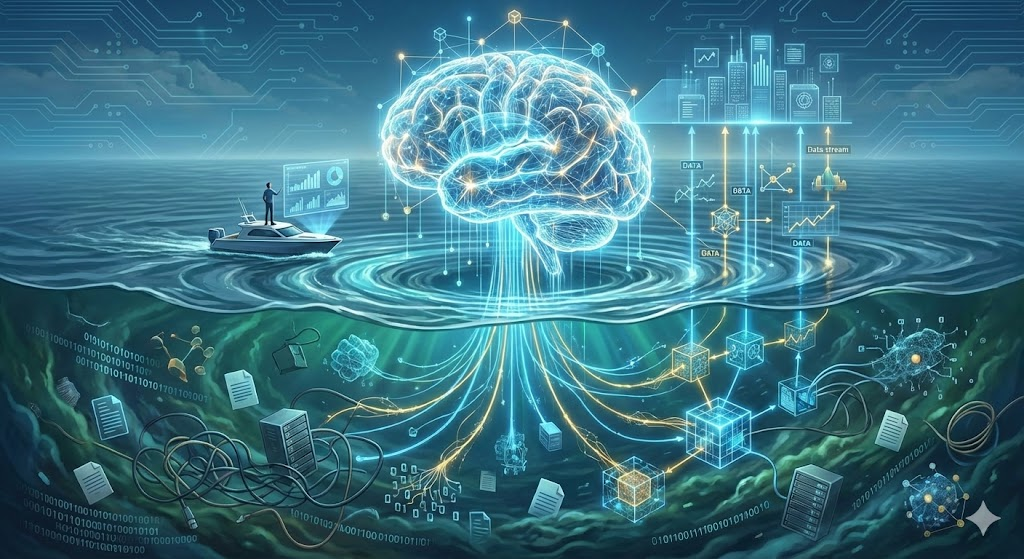
Storage is solved. Integration is being solved. The next frontier is intelligence. Turning your passive data lake into an active brain is the competitive advantage of the next decade.